Most of us have thought about it at some point — what would I actually do if someone collapsed in front of me? Would I know where to put my hands? Would I panic? Would I freeze?
It's a fair question, and it's one that thousands of Australians answer every year by completing HLTAID009 – Provide Cardiopulmonary Resuscitation. It's a short course. It doesn't take long to finish. But the skills it teaches can be the difference between life and death in the first few minutes of an emergency — often well before an ambulance arrives.
At Cardinal Institute of Education, HLTAID009 is one of our most popular short courses, and for good reason. In this post, we'll walk you through what the course actually covers, who needs it, what a training day looks like, and why CPR skills matter more than most people realise.
What Is HLTAID009?
HLTAID009 – Provide Cardiopulmonary Resuscitation is a nationally recognised unit of competency. That means when you complete it through a Registered Training Organisation (RTO) like Cardinal Institute, you receive a Statement of Attainment that's recognised right across Australia — not just in New South Wales.
The course is built around one core goal: giving you the practical skills and knowledge to respond confidently and correctly if you ever come across someone who is unconscious and not breathing normally.
It covers four key areas:
- ✓Responding to an emergency — recognising what's happening, checking for danger, and calling for help
- ✓Performing CPR — chest compressions and rescue breaths, done the right way, in line with Australian Resuscitation Council (ARC) guidelines
- ✓Using a defibrillator (AED) — a skill that's becoming more and more relevant as automated external defibrillators appear in workplaces, gyms, shopping centres, and community spaces
- ✓Communicating and reviewing the incident — reporting what happened accurately, and understanding the emotional impact CPR can have on the person who provides it
It's a compact course, but it's not a light one. Every part of it is designed to be practised, not just talked about.
Who Actually Needs This Course?
The honest answer is: almost everyone benefits from it, but for a lot of people it's also a workplace requirement.
Workers in Caring and Supervisory Roles
If you work in childcare, aged care, disability support, education, or fitness and recreation, chances are HLTAID009 (often alongside HLTAID011, Provide First Aid) is either mandatory or strongly expected by your employer or industry regulator. These are environments where you're responsible for the safety of others — sometimes people who are especially vulnerable, like young children or older adults.
Tradespeople and Construction Workers
Worksites carry real risks — falls, electrical incidents, heat stress — and having trained first responders on site isn't just good practice, it's often a compliance requirement under work health and safety laws.
Parents and Grandparents
This one doesn't get talked about enough. Most people picture CPR being performed on an adult, but a significant part of this course is dedicated to infant CPR specifically — because a baby's body, airway, and chest are different, and the technique changes accordingly. If you have young children or grandchildren in your life, this knowledge sits quietly in the background until, hopefully, you never need it — but if you do, you'll be glad you have it.
Anyone Who Simply Wants to Be Prepared
You don't need a workplace reason to do this course. Sporting clubs, community groups, volunteers, and everyday members of the public complete HLTAID009 every year, simply because they want to know that if something happens — at home, at the shops, on the sideline of their kid's football game — they won't be standing there helpless.
What Does the Training Day Actually Look Like?
This is where a lot of people are pleasantly surprised. HLTAID009 isn't a day of sitting in a classroom reading slides. It's built around doing, not just listening.
At Cardinal Institute, the course runs as a practical, half-day session, delivered face-to-face by trainers who are registered nurses with real clinical experience — not just people reading from a script. That clinical background matters. When someone teaching you CPR has actually worked in emergency and acute care settings, they bring a level of real-world context and confidence to the room that's hard to replicate.
On the day, you'll cover the theory quickly and efficiently, because the real value of this course is in the hands-on practice. Expect to spend the bulk of your time:
- ✓Practising the DRSABCD action plan — the step-by-step sequence for assessing and responding to an emergency (Danger, Response, Send for help, Airway, Breathing, CPR, Defibrillation)
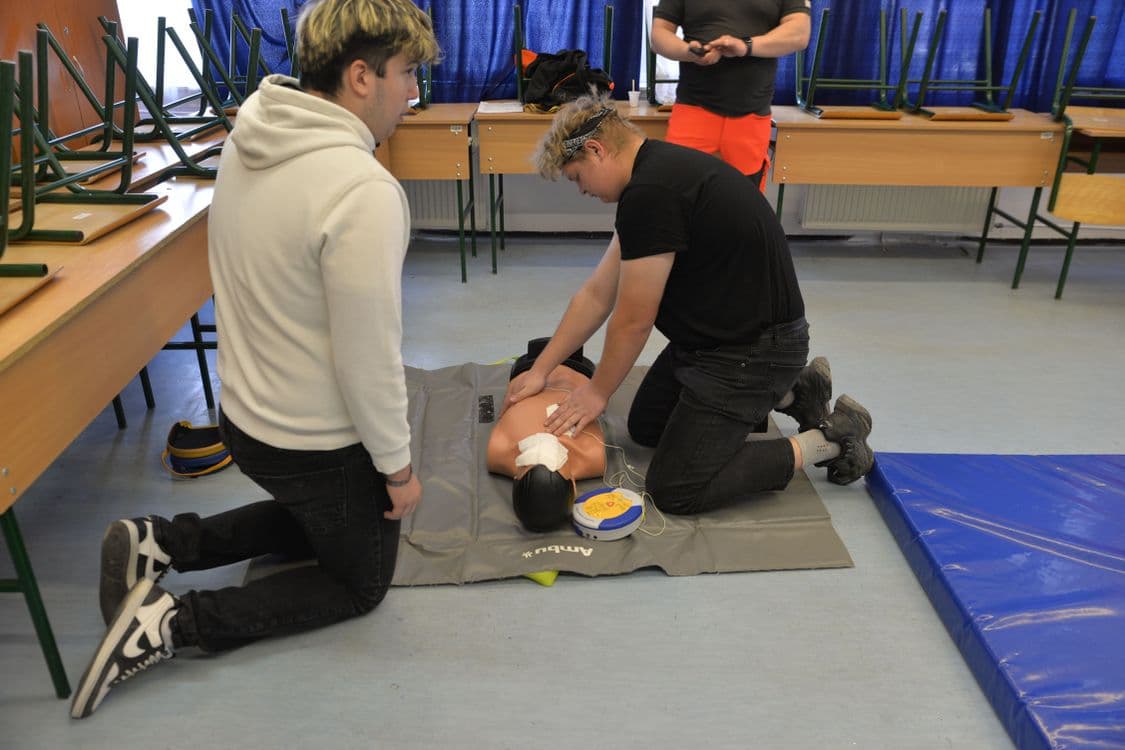
- ✓Performing chest compressions and rescue breaths on adult training manikins, positioned on the floor, exactly as you would need to in a real scenario
- ✓Practising infant CPR on a separate infant manikin, because the technique — hand position, compression depth, breathing — is genuinely different
- ✓Using an AED training device, so the sound of the prompts and the process of applying the pads isn't unfamiliar or intimidating if you ever need to use a real one
- ✓Working through realistic scenarios, including how to respond if a casualty vomits or regurgitates during CPR, and how to safely rotate with another rescuer if you get tired — because in a real emergency, CPR often needs to continue for longer than people expect
By the end of the day, you won't just have watched CPR being performed — you'll have done it yourself, multiple times, under guidance, until it starts to feel less like something foreign and more like something your hands know how to do.
It's Not Just About Technique — It's About Confidence
Here's something that doesn't always get said out loud: the biggest barrier to someone helping in an emergency usually isn't a lack of knowledge. It's hesitation. It's the fear of doing it wrong, of making things worse, of freezing up when it actually matters.
That's really what this course is designed to address. Yes, you'll learn the correct compression depth, the right ratio of compressions to breaths, and how to safely operate a defibrillator. But just as importantly, you'll walk out of the room having actually done it — under pressure, in a simulated but realistic setting — so that if the moment ever comes for real, your body already knows what to do, even if your mind is racing.
CPR Skills Don't Last Forever — And That's Okay
One thing we're always upfront about with our learners: CPR skills and knowledge have a shelf life. Guidelines get updated as new evidence comes in, and physical technique fades if it isn't practised. That's why it's recommended to refresh your CPR skills regularly, and why your HLTAID009 certification isn't a "once and done" achievement — it's something you maintain, the same way you'd renew a driver's licence or update your first aid kit.
This isn't a flaw in the system. It's actually a good thing. It means the training you receive reflects current, evidence-based practice, not techniques from a decade ago.
Why Train With Cardinal Institute?
Cardinal Institute of Education is a Registered Training Organisation delivering nationally recognised courses across Australia. Our HLTAID009 course is designed and delivered in line with current Australian Resuscitation Council guidelines, and our trainers bring genuine clinical nursing experience into every session — so you're not just being taught a procedure, you're being taught by someone who understands why each step matters.
We keep our sessions practical, our class sizes manageable, and our focus firmly on making sure that when you leave, you actually feel capable — not just certified.
Ready to Learn a Skill That Could Save a Life?
CPR is one of those skills you hope you'll never need. But if the moment comes, there's no substitute for having trained for it. A few hours of your time now could mean everything to someone else later — a colleague, a stranger, a family member, or your own child.
If you're ready to build that confidence, get in touch with Cardinal Institute of Education today to find out more about our upcoming HLTAID009 sessions, or ask us about combining it with HLTAID011 – Provide First Aid for a more complete skill set.
Interested in HLTAID009 Provide CPR?
Explore our HLTAID009 Provide CPR course and discover your study options.
View Course